Skip to content
Black Ancestry and Reparations

The case

A debt with a paper trail.

This page is the long version. Every claim carries a source and a year. Where historians disagree, we print the disagreement instead of picking the number that helps us most.

1865 to now

Nine moments, each one documented.

  1. Jan 1865

    Special Field Orders No. 15

    Sherman sets aside roughly 400,000 acres of coastal land from Charleston to the St. Johns River. Around 40,000 freedpeople settle it. The grant is possessory title only, held until Congress regulates the title. There is no mule anywhere in the order.

  2. Mar 1865

    Two institutions chartered on the same day

    Congress creates the Bureau of Refugees, Freedmen, and Abandoned Lands and the Freedman’s Savings and Trust Company on March 3, 1865. One will generate the archive. The other will take the deposits.

  3. Fall 1865

    Andrew Johnson reverses the land grant

    Over the objection of Commissioner O. O. Howard, the coastal land is returned to its former owners. The first American reparations program is undone inside a year.

  4. Jun 1874

    The Freedman’s Bank fails

    Trustees vote to close on June 29, 1874, with Frederick Douglass serving as its last president. The collapse leaves 61,144 depositors with losses of nearly three million dollars. Depositors recovered only a share of what they were owed. There was no full federal reimbursement.

    Office of the Comptroller of the Currency, institutional history.

  5. May 1921

    Tulsa

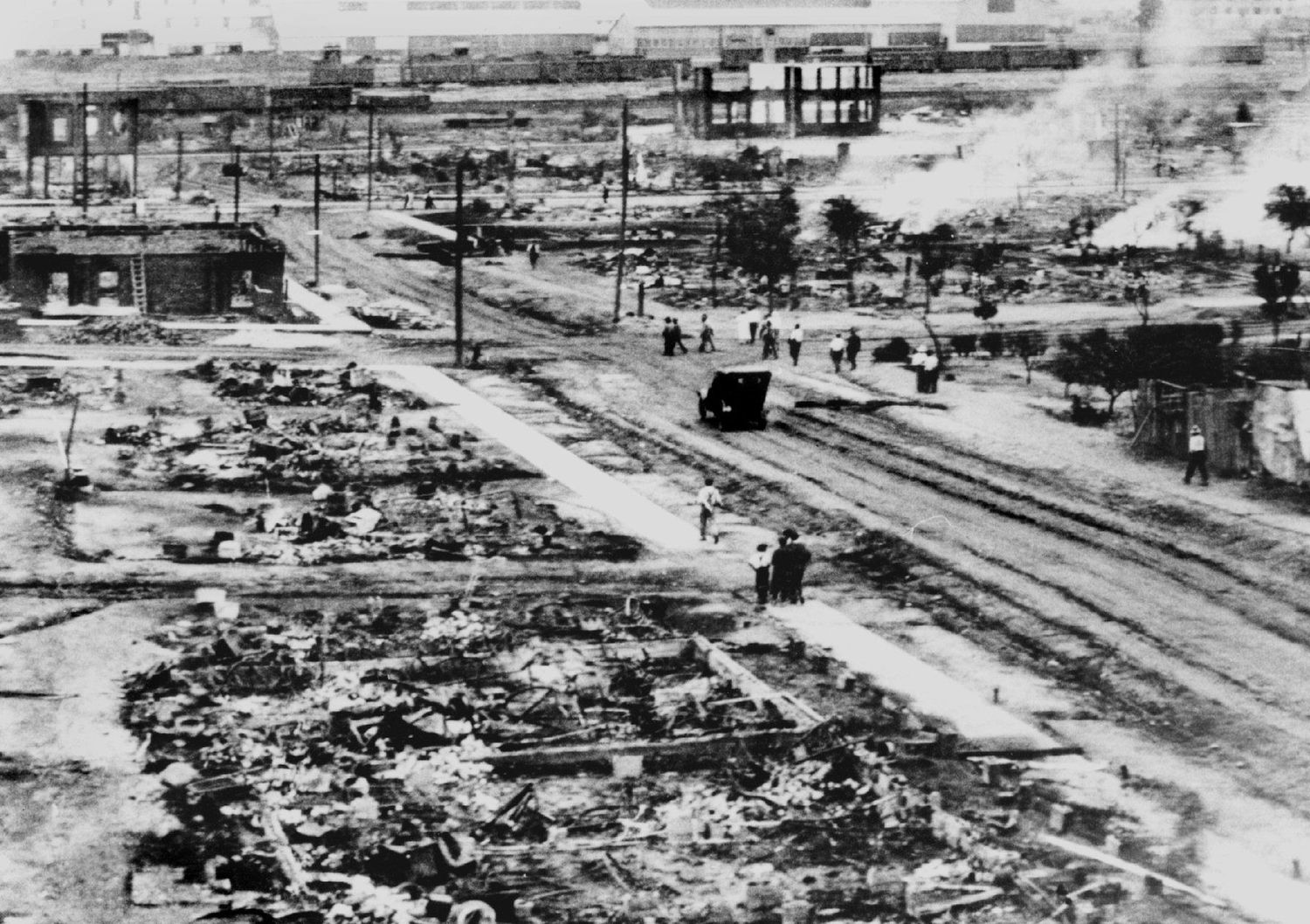
    Thirty five city blocks of the Greenwood district are destroyed over two days. The official contemporaneous tally recorded 36 deaths. The 2001 Oklahoma Commission concluded the true toll was between 100 and 300. Those are two different claims and we do not merge them.

  6. 1935–1940

    The maps

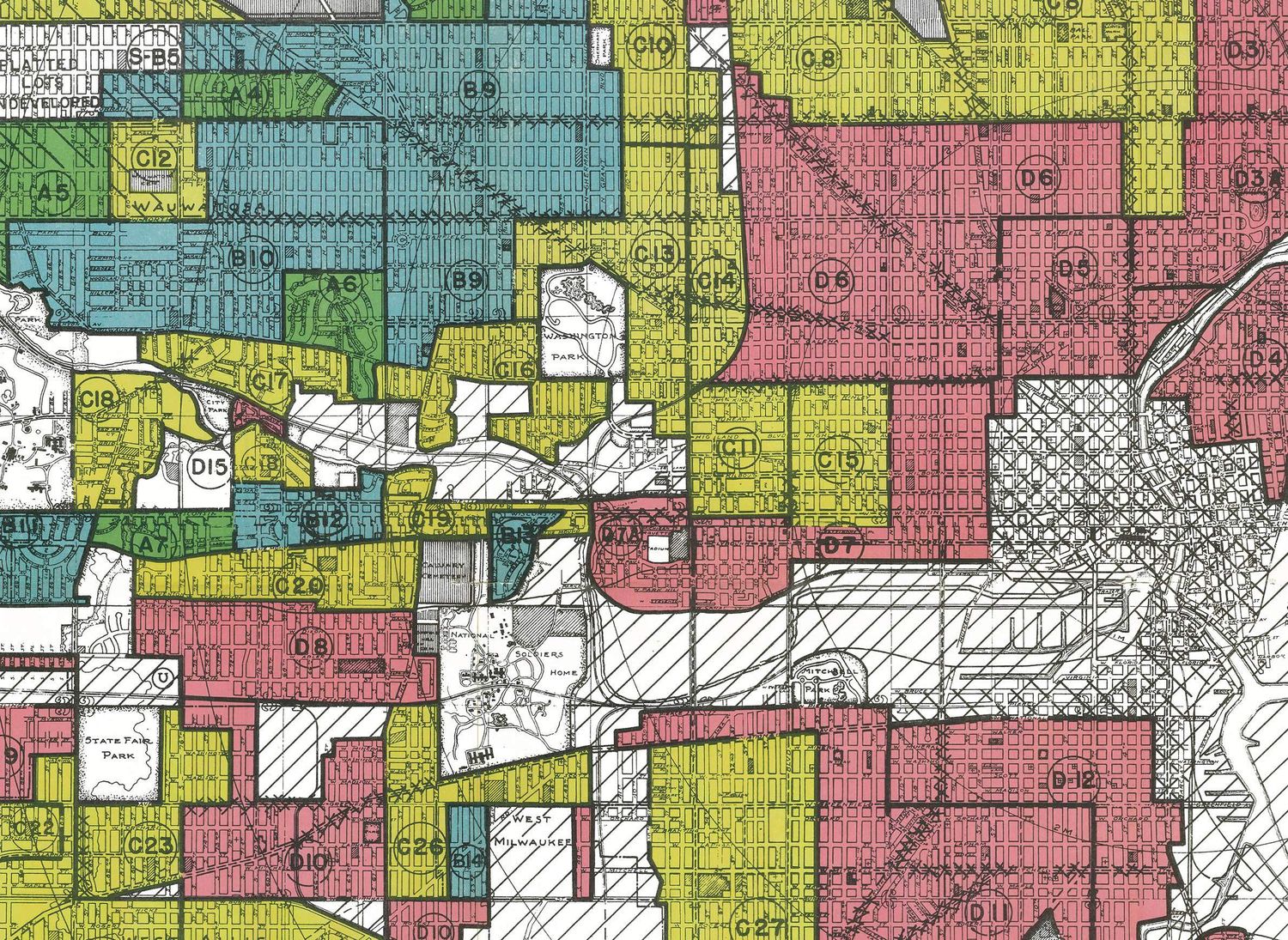
    The Home Owners’ Loan Corporation grades neighborhoods A through D across 148 urban regions. Black neighborhoods are outlined in red and graded hazardous. Federal housing capital follows the colors for a generation. The Fair Housing Act does not arrive until April 11, 1968.

  7. Aug 1988

    America proves it can do this

    President Reagan signs the Civil Liberties Act. Japanese Americans incarcerated during the war receive $20,000 each plus a formal apology. 82,219 people are paid. The statute names the cause: racial prejudice, wartime hysteria, and a failure of political leadership.

  8. 1989–now

    H.R. 40 waits

    Introduced by Rep. John Conyers in January 1989 and every Congress since. The current version, sponsored by Rep. Ayanna Pressley with 114 cosponsors, was referred to the House Judiciary Committee on January 3, 2025. That referral is still the only action taken. The bill would fund a thirteen member study commission with twenty million dollars. It authorizes no payments to anyone.

    congress.gov, 119th Congress. Status verified August 2026.

Part one

The promise was made in writing, then withdrawn in writing.

The reason reparations is a legal argument and not only a moral one is that the United States created the obligation itself, on paper, and then rescinded it. Special Field Orders No. 15 was a federal instrument. It reserved specific land. It named the terms. Forty acres of tillable ground per family, held as possessory title until Congress regulated it. Roughly 40,000 people took the government at its word and settled.

Within a year, Andrew Johnson returned the land to the men who had waged war against the United States to keep those same families in bondage. Commissioner Howard objected and was overruled.

Nine years later the Freedman’s Savings and Trust Company, chartered by Congress on the same day as the Freedmen’s Bureau and widely understood by depositors as a government bank, collapsed after speculative lending by its trustees. 61,144 depositors lost close to three million dollars. Congress did not make them whole.

This is the foundation of the claim. Not a general grievance about the past, but two specific federal actions that created value for Black families and two specific federal decisions that took it back.

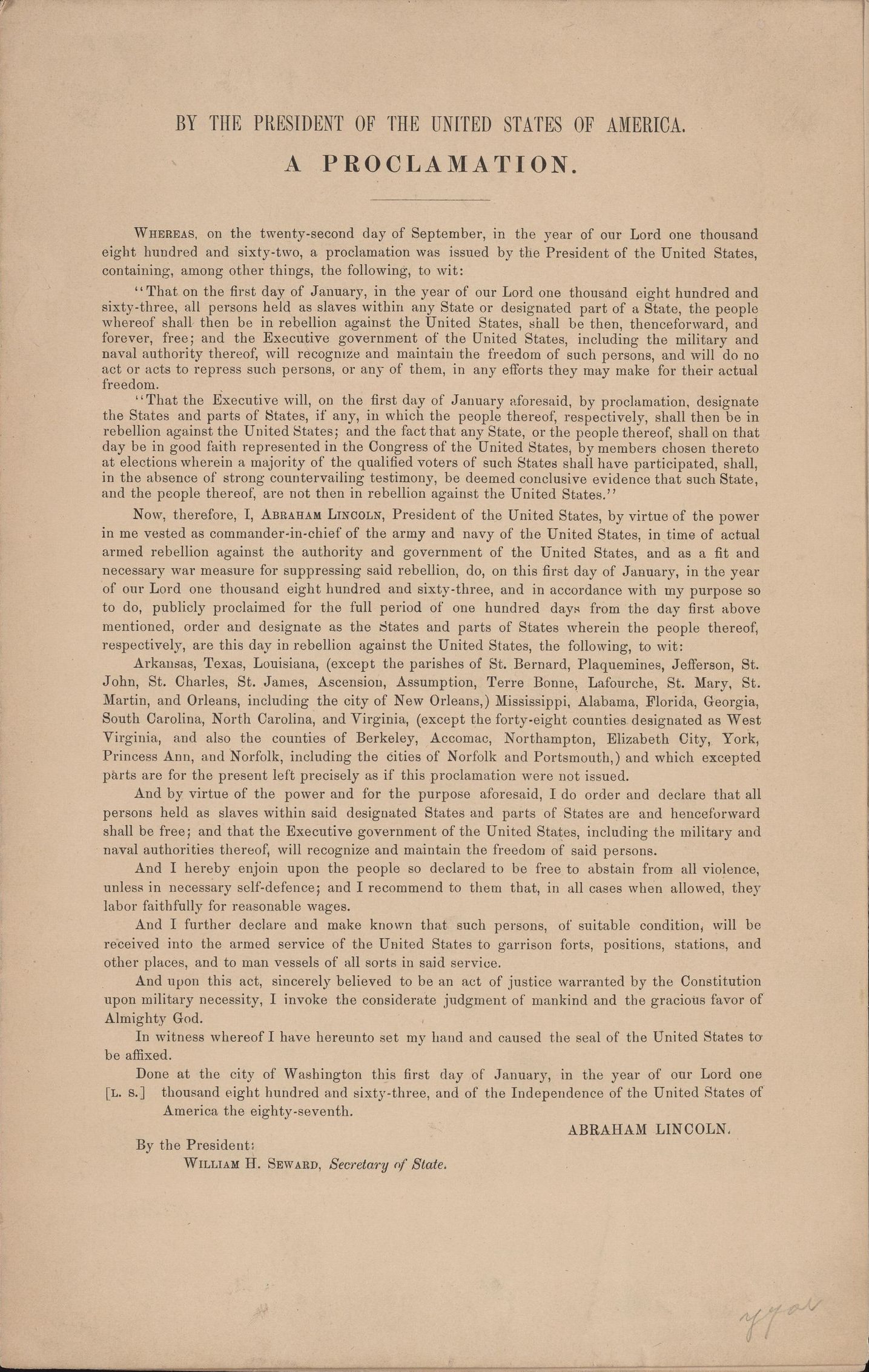
A printed broadside of the Emancipation Proclamation on aged paper.
Emancipation Proclamation broadside. Library of Congress, Alfred Whital Stern Collection. Public domain.
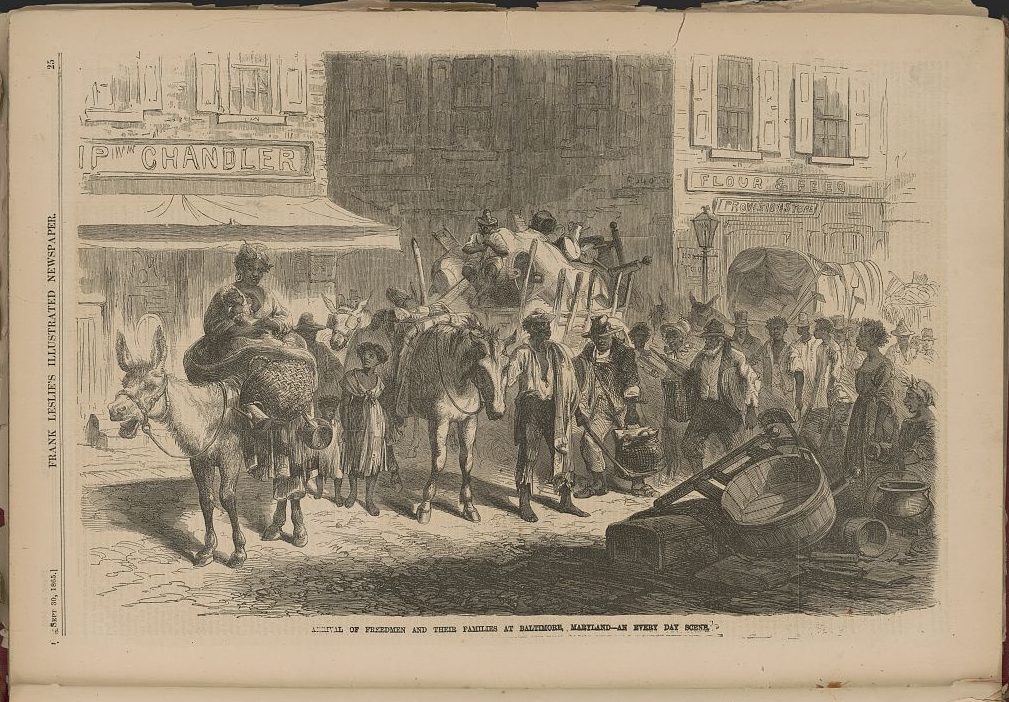
Engraving of freedpeople and their families arriving at Baltimore with their belongings.
Arrival of freedpeople and their families at Baltimore, Maryland. Library of Congress. No known restrictions.

Part two

The harm did not end in 1877. It was administered.

The strongest part of the modern case is not the antebellum period at all. It is the twentieth century, where the discrimination was carried out by federal agencies, recorded in federal files, and is still legible.

Wide view across blocks of the destroyed Greenwood district in Tulsa after the 1921 massacre.

Greenwood, 1921

The Justice Department reviewed the massacre under the Emmett Till Act and issued its report on January 10, 2025. It found a coordinated, military style attack rather than uncontrolled mob violence, with law enforcement deputized and in some cases participating. It also found that no avenue of prosecution now exists.

In Randle v. City of Tulsa, decided June 12, 2024, the Oklahoma Supreme Court affirmed dismissal of the surviving claimants’ public nuisance and unjust enrichment claims. Viola Ford Fletcher died in November 2025. As of May 2026, Lessie Benningfield Randle, aged 111, is the last living survivor.

US Department of Justice; Oklahoma Supreme Court No. 121502.

A Home Owners Loan Corporation residential security map with graded neighborhood zones in color.

Redlining was a federal product

The Home Owners’ Loan Corporation was created by an act signed on June 13, 1933. Between 1935 and 1940 it produced residential security maps grading neighborhoods from A, best, to D, hazardous. The digitized set covers 148 urban regions in 28 states and you can look up your own city.

These are not private prejudices reconstructed by historians. They are government documents with a legend.

Mapping Inequality, University of Richmond Digital Scholarship Lab.

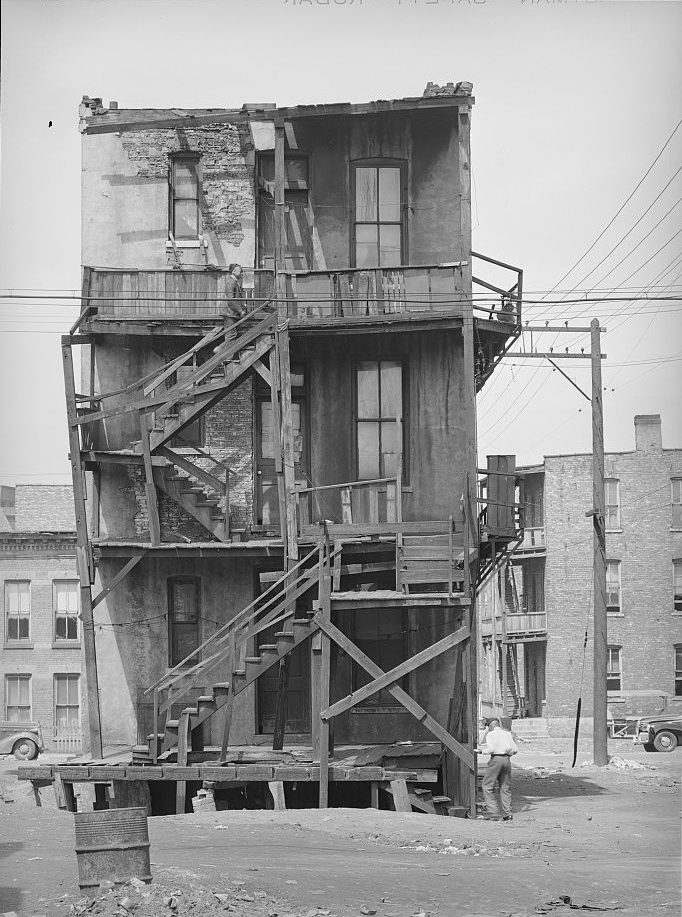
Rear wooden porches and stairs of multi-family dwellings rented to Black families on the South Side of Chicago in 1941.

The GI Bill, administered locally

The single largest wealth building program in American history was written race neutral and delivered through local banks and local Veterans Administration offices. The historian Ira Katznelson documented that of 67,000 GI Bill insured mortgages in the New York and northern New Jersey suburbs, fewer than 100 went to non white buyers.

We attribute that figure to Katznelson rather than to the VA, because it is his research and not an official agency dataset. That distinction matters when you are arguing in front of people who will check.

Ira Katznelson, When Affirmative Action Was White, 2005.

Part three

What it adds up to, in current dollars.

Every figure below is date stamped. The Federal Reserve fielded a new Survey of Consumer Finances through December 2025 and will publish results late in 2026. When it lands, these numbers change and we will change them.

Measured racial gaps in wealth and homeownership with sources and years
Measure White Black Source and year
Median family wealth $285,000 $44,900 Federal Reserve SCF, 2022 dollars
Wealth ratio $100 about $16 Federal Reserve SCF, 2022, up from $9 in 2013
Homeownership rate 74.5% 45.4% Census Bureau, Q2 2026
Median dollar gap over $220,000, widened by about $50,000 since 2019 Federal Reserve SCF, 2022

The cost estimates, and why we quote them with dates

William Darity and Kirsten Mullen, whose book From Here to Equality is the standard reference, wrote in 2020 that closing the gap would require at minimum ten to twelve trillion dollars in federal expenditure. By 2023 they were citing at least fourteen trillion. The estimate moves because the underlying wealth data moves.

You will see a per person dollar figure quoted widely online. We do not publish one, because we could not verify it against a primary Darity source. If we cannot check it, it does not go on this site.

Brookings, 2020. CNBC interview, January 2023.

The eligibility standard, stated exactly

From Darity’s sworn testimony to the House Judiciary Subcommittee on June 19, 2019, there are two criteria. First, an individual must demonstrate at least one ancestor enslaved in the United States. Second, they must have self identified as Black, Negro, or African American on a suitable state or federal legal document. That identification must hold for at least ten years prior to the start of the program or the formation of the study commission, whichever comes first.

He is explicit about the method: genealogical documentation, and absolutely no phenotype, ideology, or DNA tests. You will often see this quoted as twelve years. The testimony says ten.

House Judiciary Subcommittee, June 19, 2019, submitted testimony.

Part four

Enacted, funded, or just announced?

This is where most coverage falls apart. Study commissions get reported as reparations programs. Fundraising goals get reported as money raised. Here is the strict version.

Paying now

Evanston, Illinois

The only jurisdiction in the United States currently making direct cash reparations payments to individuals. The Local Reparations Restorative Housing Program commits $10 million over ten years, funded by a three percent municipal tax on cannabis retail sales. Eligible households receive up to $25,000. The harm period runs from 1919 to 1969, and the recipient must reside in Evanston at disbursement.

It is also the test case. Flinn v. City of Evanston was filed in the Northern District of Illinois in May 2024 by six non Black plaintiffs. The motion to dismiss was denied in March 2026 and the case is ongoing. Anyone designing a program anywhere should be reading that docket.

City of Evanston Resolution 126-R-19. Flinn v. City of Evanston, No. 1:24-cv-04269.

Studied, apologized, no cash

California

AB 3121 was signed on September 30, 2020, creating the first state reparations task force in the country. Its 1,080 page final report was delivered to the Legislature on June 29, 2023 with more than 115 recommendations. On September 26, 2024 the governor signed AB 3089, a formal state apology for California’s role in slavery.

What did not happen matters just as much. The bill to create a Freedmen Affairs Agency died on the inactive file. So did the reparations fund bill. The eminent domain restitution bill was vetoed, as were two further bills in 2025. What passed instead, in October 2025, was SB 518, creating a Bureau for Descendants of American Slavery inside the Civil Rights Department, with no cash payment authority. California has authorized no direct payments.

California Legislative Information; California Department of Justice.

Goal, not funding

Tulsa, Oklahoma

Mayor Monroe Nichols announced the Road to Repair on June 1, 2025. The structure is the Greenwood Trust, a private charitable trust rather than a city appropriation, with a $105 million target split across housing, cultural preservation and legacy funds. It contains no direct cash payments to individuals, and the $105 million is a fundraising goal. No figure for money actually raised has been published.

City of Tulsa.

Funded, community investment

Providence, Rhode Island

Ten million dollars in federal recovery funds were allocated toward homeownership, home repair, small business support, workforce development and scholarships. These are community investments, not payments to individuals. As of the city’s February 2025 reporting, just over seven million had actually been obligated.

City of Providence reparations recommendations report and ARPA reporting.

Still in progress

Maryland, New York, Illinois

Maryland’s SB 587 was vetoed by Governor Wes Moore on May 16, 2025 and the veto was overridden on December 16, 2025. A preliminary report is due January 1, 2027 and a final report November 1, 2027. New York’s commission was signed into law on December 19, 2023 and first met in July 2024, but its reporting deadline was extended in the enacted state budget and no report exists yet. Illinois released a 294 page harms report on February 27, 2026 that documents harms without yet recommending remedies.

Maryland General Assembly; New York State; Illinois ADCRC.

Sunset

Asheville and Detroit

Asheville, North Carolina passed its reparations resolution in July 2020, appropriated $2.1 million, and its commission produced 39 recommendations before being dissolved by council resolution on October 14, 2025. Detroit’s task force submitted a 558 page report in October 2025 and its authority ended on October 31, 2025 with no money appropriated. Commissions that produce reports without a funding mechanism attached do not survive a change of council.

City of Asheville; Detroit City Council.
Part five

This country has paid reparations before.

The claim that it cannot be done, or that it has never been done, is answerable with statutes.

1988

Civil Liberties Act

$20,000 per surviving eligible individual and a presidential apology for wartime incarceration. 82,219 people received redress. First checks presented October 9, 1990. More than $1.6 billion was ultimately paid out. Signed by President Reagan; the apology letters that accompanied the checks were signed by President George H. W. Bush.

1994

Rosewood, Florida

For the 1923 massacre and destruction of a Black town, Florida appropriated $2.1 million, signed by Governor Lawton Chiles on May 4, 1994. Nine survivors received $150,000 each for mental anguish, with a separate fund for documented property loss and a family scholarship fund that was later written into state statute.

2019

Virginia Theological Seminary

A $1.7 million endowment announced September 5, 2019, with the first cash payments made in February 2021. As of June 2025 the endowment stood at $2.8 million and more than 200 descendants were receiving annual payments. The seminary identified over 545 Black people whose labor sustained it between 1823 and 1951.

2021

The Jesuit pledge

After Georgetown sold 272 enslaved people in June 1838 for $115,000, the Jesuits pledged to raise $100 million for a descendants foundation. By August 2022 only $15 million had been raised, and the foundation’s own president said so publicly. A pledge is not a payment, and we treat it that way.

One more data point worth knowing when you are in the room: in a February 2025 survey, 64 percent of Americans approved of the Japanese American redress payments, including majorities of Democrats, Republicans and independents. Support for a completed program looks very different from support for a proposed one.

Part six

The objections, stated at full strength.

If you can only beat the weak version of the other side’s argument, you are not ready for the room where this gets decided. Here are the serious objections as their strongest advocates actually make them, followed by the honest response.

This is the central argument in Coleman Hughes’s testimony on H.R. 40 in June 2019, and it deserves a real answer rather than a dismissal.

The response is that the claim does not rest only on the antebellum period. It rests substantially on twentieth century federal programs administered discriminatorily, within the lifetimes of people alive today. A man who was denied a federally insured mortgage in 1955 may still be living. His children inherited the absence of that house. That is not an ancestral grievance, it is a current balance sheet.

It is also why the strongest reparations designs anchor eligibility and harm calculation in the 1930s to 1970s rather than in 1865 alone.

This is the most serious objection on the list, and pretending otherwise is how programs get built and then dismantled.

In City of Richmond v. J. A. Croson Co., 488 U.S. 469 (1989), the Court held that a generalized assertion of past discrimination cannot justify a race based remedy. The reasoning in the 2023 Harvard and North Carolina admissions decision narrowed the ground further. Neither case rules on reparations directly, but together they set the framework any such program has to survive.

The design response is lineage rather than race. A rule keyed to documented descent from enslavement is a rule about ancestry and provable injury, not about skin color, and that is a materially different legal posture. It is being tested in Flinn v. City of Evanston right now. Anyone who tells you the answer is already settled has not read the docket.

This is the objection this project takes most personally, because it is the one that is answerable with work rather than argument.

The federal government already ran this exact administrative process. It adjudicated 22,298 Southern Claims Commission files with sworn testimony and neighbor affidavits. It verified 82,219 people for redress under the Civil Liberties Act in a few years, using immigration and War Relocation Authority records.

The record sets exist and most of them are free. The obstacle is not feasibility, it is that nobody has been funded to do it at scale. That is a budget problem wearing the costume of an impossibility.

The strongest version of this argument is not made in bad faith. It holds that universal programs on housing, health and income build broader coalitions, survive courts more easily, and reach poor Black Americans in larger numbers than any targeted program would.

The counter is the GI Bill. It was universal on its face and it produced one of the widest wealth divergences in American history, because delivery was local and discretion was local. Universality without a targeting mechanism does not guarantee equal delivery. It guarantees equal eligibility, which is not the same thing.

The honest concession: this objection has real force on political feasibility, and Gallup’s finding that most Americans who accept federal responsibility still prefer all Black Americans to benefit rather than only descendants shows why. It is a live strategic disagreement, not a settled one.

Do it yourself

Trace your own line, starting free.

You do not need a subscription to begin and you do not need to pay anyone to tell you what is in a public record. Work in this order.

A caution worth stating: we are not a genealogy service and we do not certify anyone’s lineage. This is a reading list to a public archive.

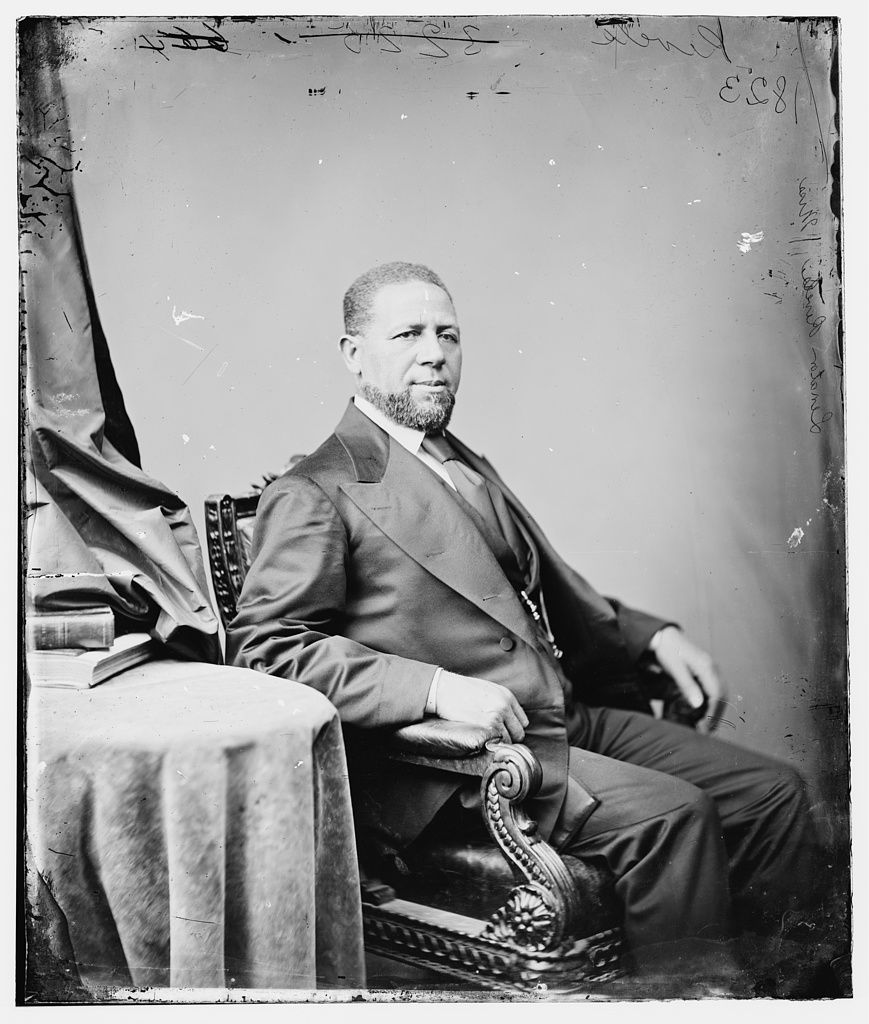
Nineteenth century studio portrait of Hiram Rhodes Revels, the first Black United States Senator.

Hiram Rhodes Revels. Library of Congress, Brady-Handy Collection. No known restrictions.

  1. Step one, free

    Work backward to 1940, then to 1870

    Start from what you know and move one census at a time. The 1900 census is unusually valuable because it records the month and year of birth for every person, years married, and for women the number of children born and still living.

    Both the 1870 and 1900 schedules are free on FamilySearch. Ancestry and FamilySearch are also both free on site at every National Archives research facility.

    NARA census resources
  2. Step two, free

    Search the Freedmen’s Bureau portal

    The Smithsonian National Museum of African American History and Culture hosts a name searchable portal into the Bureau records. No account required. Search by name, place and date. Labor contracts and marriage registers are the highest yield record types.

    Freedmen’s Bureau search portal
  3. Step three, free

    Check the Freedman’s Bank registers

    NARA microfilm M816 holds the depositor signature registers, 1865 to 1874, across 29 branches. A single entry can name parents, siblings, spouse, children, birthplace and employer, and in some early volumes the former owner and plantation. If your family banked there, this one card can break the 1870 wall by itself.

    NARA Freedman’s Bank records
  4. Step four, free

    Southern Claims Commission files

    If your family was in the South during the Civil War, check these. The approved and disallowed case files contain sworn questionnaires and affidavits from neighbors, which frequently place a family in a specific location with named associates.

    NARA Southern Claims Commission
  5. Step five, free

    Bureau marriage and school registers

    Thousands of couples formalised unions the law had refused to recognise, and the Bureau wrote them down. Marriage certificates frequently list every child with an age, which reconstructs a household in a single document. School reports name teachers and pupil counts by settlement.

    NARA Record Group 105
  6. Step six, free

    Map the twentieth century harm

    Once you have addresses, look them up in Mapping Inequality. Seeing the HOLC grade assigned to the block your grandmother lived on is the moment this stops being an abstraction for most people.

    Mapping Inequality

Bring what you find to the table.

OUR NATION meets weekly to work through exactly these questions. Start free on Community, or open the full curriculum from $47 a month.